

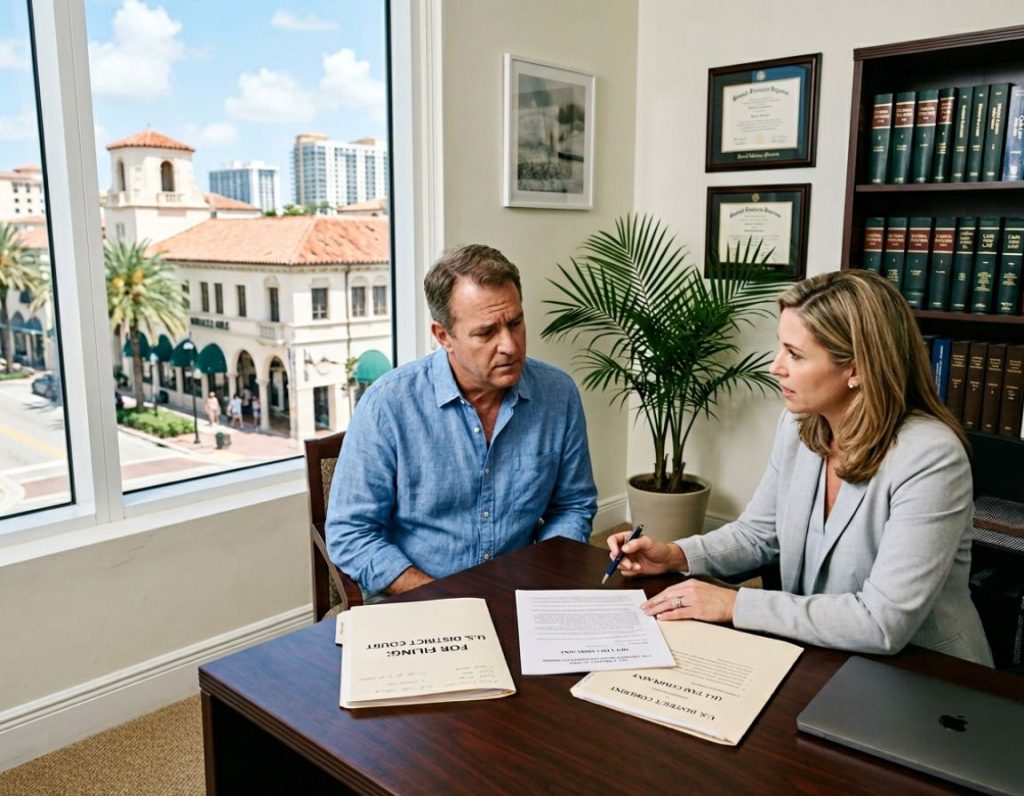
Why qui tam in Coral Gables is different
If you are trying to understand how to file a qui tam action in Coral Gables, you are already in a narrow, high‑stakes lane. You are not just reporting misconduct. You are invoking the federal False Claims Act, and potentially the Florida False Claims Act as well, to challenge systemic fraud tied to Medicare, Medicaid, or other government payers.
In South Florida, healthcare fraud is an enforcement priority. That cuts both ways. Strong cases are taken seriously. Weak or mishandled cases expose you to professional risk and, in some scenarios, retaliation.
This guide walks you through how to file a qui tam action in Coral Gables step by step, from your first confidential conversation with counsel through filing under seal and navigating government intervention decisions. The Health Law Offices of Anthony C. Vitale, P.A. regularly helps healthcare executives and clinicians manage this process in a way that protects their licenses, organizations, and reputations.
Nothing here is legal advice for your specific facts. It gives you a realistic playbook so you know what to expect when you sit down with counsel.
Understand what a qui tam action actually is
Before you decide whether to move forward, you need to be clear on what you are doing from a statutory perspective.
A qui tam action is a lawsuit that you file on behalf of the United States under the Civil False Claims Act to recover money the government lost because of fraud or false claims for payment. This framework applies nationwide, including in Coral Gables and the broader South Florida healthcare market (FHV Legal).
You are called the “relator.” The United States is the real party in interest. You are not filing a typical private dispute. You are asking the government to investigate and, in many cases, to step into the case you started and take over.
Under the federal False Claims Act, if your action leads to a recovery, you may receive between 15 and 30 percent of the recovered funds, depending on whether the government intervenes and on your level of assistance (FHV Legal). Florida’s False Claims Act uses a similar 15 to 30 percent structure if you pursue a state case successfully (Florida Bar Journal).
If you need a refresher on the core mechanics, start with what is a qui tam lawsuit under the false claims act so you and your leadership team are aligned on the basics.
Confirm your role and eligibility as a whistleblower
Not everyone with a concern is positioned to file a viable qui tam action. You need the right status and the right type of information.
Under the federal False Claims Act, eligible whistleblowers usually include current or former employees, contractors, consultants, and sometimes competitors or patients who have non‑public information about fraud involving government contracts, grants, or programs (Federal Lawyer). In healthcare, that often means you are inside or close to:
- Hospitals and health systems
- Physician group practices
- Home health agencies, hospices, or DME suppliers
- Pharmacies, labs, or device manufacturers
Your information typically must qualify as “original information.” It should not already be publicly disclosed in a way that would bar your action, and it must be specific enough to support a plausible fraud theory (Federal Lawyer).
You do not have to resolve eligibility questions alone. In fact, you should not. Early, privileged conversations with qui tam counsel at The Health Law Offices of Anthony C. Vitale, P.A. can clarify whether you meet threshold requirements and whether a qui tam route is even appropriate or if another reporting channel is smarter in your situation.
Map the fraud clearly before you move
Government attorneys and experienced qui tam lawyers think in terms of elements. Before you file anything, you should be able to articulate:
- Who is submitting, causing, or certifying the false claims
- What specific claims, cost reports, or certifications are false
- Which federal or state programs are paying the tainted claims
- How the scheme works in practice, including timeframes and volumes
For example, in Coral Gables you might be looking at a pattern of medically unnecessary infusion services billed under Part B, upcoded home health episodes tied to face‑to‑face documentation that never occurred, or kickback‑driven referral arrangements that taint Medicare or Medicaid claims.
You do not need a trial‑ready case when you first talk to counsel. You do need more than a suspicion or a workplace grievance. Well‑organized data, emails, sample claims, and internal policies can make the difference between a matter the Department of Justice will investigate and a complaint that is quickly declined.
You also must be careful about how you collect and preserve evidence. Pulling documents you are not legally entitled to access, or misusing patient‑identifiable information, can create regulatory and employment exposure. An experienced healthcare compliance and qui tam firm like The Health Law Offices of Anthony C. Vitale, P.A. will help you define what you may safely gather and how to secure it.
Engage experienced qui tam counsel early
Under the False Claims Act, you cannot file a qui tam action on your own. The statute requires you to be represented by a licensed attorney because the action is filed under seal and on behalf of the United States (Bracker & Marcus LLC).
In practice, that means your first operational step in Coral Gables is to retain counsel who:
- Understands federal False Claims Act practice
- Knows how federal enforcement works within the Eleventh Circuit and Southern District of Florida
- Has deep familiarity with healthcare reimbursement, licensing, and collateral regulatory risk
National whistleblower resources recommend a confidential consultation before anything else. You bring the facts and any lawfully obtained documents you have, and your counsel evaluates viability, exposure, and timing (Carolina Whistleblower Attorneys).
If you are still comparing firms and need a framework, see finding legal representation for whistleblower claims so you can ask sharper questions during your initial calls.
Decide between federal and Florida False Claims Act routes
In Coral Gables, your fact pattern might implicate:
- Only federal funds, such as Medicare, TRICARE, or federal research grants
- Only state or local funds, such as Florida Medicaid or county programs
- Both state and federal money in intertwined billing streams
The federal False Claims Act gives you the ability to file under seal in federal district court, including in the Southern District of Florida. Your complaint triggers a Department of Justice investigation and a 60 day initial window, often extended, for the government to decide whether to intervene (Federal Lawyer).
Florida’s False Claims Act gives you a similar path at the state level. To initiate a Florida qui tam case, you notify the Florida Attorney General and Chief Financial Officer and provide all material evidence you possess. Then you file a sealed complaint in the Second Judicial Circuit Court in and for Leon County, and the state has 60 days to decide whether to intervene, with the option to extend that period (Florida Bar Journal, Halunen Law).
You do not have to choose blindly. Your attorney will assess where the strongest claims lie, which sovereign has the most at stake, and whether a coordinated federal and state strategy makes sense for you.
Respect the statute of limitations from day one
Timing is not a technicality in qui tam practice. It shapes whether you have a case at all and how far back you can reach.
Under the federal False Claims Act, the basic statute of limitations is:
- 6 years from the date of the violation, or
- Up to 10 years if you file within 3 years of when the government knew or should have known of the violation, but no more than 10 years after it occurred
This structure is codified in 31 U.S.C. 3731(b) and has been explained in detail by False Claims Act practitioners (Berger Montague). Courts are split on whether the 3 year tolling concept applies when only the relator, not the government, files and the government does not intervene. Some courts, including the Eleventh Circuit that covers Coral Gables, have held that the extended period can still benefit relators even when the government declines intervention (Berger Montague).
Florida’s False Claims Act has a similar 6 year or 3 year from discovery construct, with an absolute 10 year outer limit (Halunen Law).
You cannot safely rely on a generalized 10 year window. Your counsel has to map specific claim dates to the statute that applies in your jurisdiction and to any controlling case law in the Eleventh Circuit.
Prepare the disclosure statement and complaint under seal
Once you and your counsel commit to move forward, the practical filing work begins. In a typical federal False Claims Act matter related to Coral Gables healthcare entities, you will:
- Work with your attorney to prepare a detailed narrative disclosure that lays out the fraud scheme, participants, and supporting evidence. Experienced whistleblower lawyers emphasize that this disclosure, filed alongside your complaint, sets the tone for how seriously the government will take your case (Carolina Whistleblower Attorneys).
- Draft a civil complaint that pleads the fraud in sufficient detail, identifies you as a relator, and is clearly designated as a qui tam action. This complaint is not served on the defendant at filing. It is filed under seal in the appropriate federal district court, including the Southern District of Florida for Coral Gables cases (Bracker & Marcus LLC).
- Serve the complaint and disclosure on the Attorney General of the United States and the United States Attorney for the district, along with all material evidence you have, in the format required by statute and federal practice (Federal Lawyer).
If you pursue a Florida False Claims Act case as well, you must serve the complaint and written disclosure on the Florida Attorney General and Chief Financial Officer by registered mail with return receipt and file the complaint under seal in Leon County, clearly labeled as a qui tam action (Halunen Law).
During this under seal phase, your identity and the allegations remain confidential for at least 60 days, often much longer, while agencies investigate (Bracker & Marcus LLC, Carolina Whistleblower Attorneys).
Cooperate with the government investigation
After filing, your case shifts from drafting to investigation. The Department of Justice and relevant agencies, for example HHS OIG or the FBI for healthcare fraud, review the complaint, the disclosure, and your evidence. They can and often do request additional documents, interviews, and analysis.
Your role during this period is to:
- Maintain strict confidentiality. Do not discuss the sealed case with colleagues, counterparties, or anyone outside your legal team.
- Respond promptly and completely to government requests, through your counsel. The extent and quality of your assistance can influence whether the government intervenes and the percentage of any award you receive (Federal Lawyer).
- Work with your attorney to identify additional sources of lawfully available evidence, such as publicly available CMS data or properly retained employment records, that can bolster the case without breaching privacy or trade secret rules (Bracker & Marcus LLC).
Under both federal and Florida acts, the government initially has 60 days to decide whether to intervene, and courts regularly grant extensions when more investigation is warranted (Federal Lawyer, Florida Bar Journal).
While the complaint is under seal, the defendant is not served and does not need to respond. Florida’s statute, for example, provides that the defendant does not respond until at least 20 days after unsealing (Halunen Law).
Navigate intervention and potential independent litigation
At the end of the investigation period, the government will either intervene in your action or decline to do so.
If the government intervenes, it assumes primary responsibility for prosecuting the case. You and your counsel remain parties and can still have a meaningful role, but the Department of Justice or the Florida Attorney General drives major strategic decisions. In a successful intervened case, your share of the recovery typically falls in the 15 to 25 percent range (Carolina Whistleblower Attorneys, Florida Bar Journal).
If the government declines, you and your attorney can elect to proceed with the case independently on behalf of the United States or the State of Florida. If you achieve a settlement or judgment in that scenario, your share usually increases to the 25 to 30 percent range (Federal Lawyer, Florida Bar Journal).
Continuing without government intervention is not a casual decision. It requires:
- Litigation resources and stamina
- Comfort with discovery demands and potential public scrutiny
- A clear-eyed assessment of merits and collectability
The Health Law Offices of Anthony C. Vitale, P.A. helps healthcare clients weigh these factors in the specific enforcement climate of Coral Gables and South Florida, where defendants are often sophisticated systems with seasoned defense teams.
Protect yourself from retaliation and collateral risk
Federal and Florida laws recognize that whistleblowers in healthcare are vulnerable to retaliation. The False Claims Act explicitly protects employees, contractors, and agents who take lawful acts in furtherance of a qui tam action or efforts to stop violations. Retaliation can include firing, demotion, suspension, threats, or harassment (Bracker & Marcus LLC, Carolina Whistleblower Attorneys, FHV Legal).
If your employer or affiliated entity retaliates, you may seek remedies such as:
- Reinstatement at the same seniority
- Double back pay with interest
- Compensation for special damages like litigation costs and attorney’s fees (Bracker & Marcus LLC)
For healthcare executives and clinicians, retaliation is not the only concern. You also need to manage:
- Licensure implications before the Florida Department of Health or professional boards
- Credentialing and privileging consequences with hospitals, payers, and networks
- Contractual non‑disparagement or confidentiality clauses
An experienced healthcare law firm is essential here. The Health Law Offices of Anthony C. Vitale, P.A. routinely integrates False Claims Act strategy with professional licensure, corporate compliance, and payer enrollment considerations, which is particularly important in a tight market like Coral Gables.
Coordinate your next steps in Coral Gables
Once you understand how to file a qui tam action in Coral Gables and what it demands of you, the most important question becomes whether this is the right move for you now, given your role, risk tolerance, and evidence.
If you are ready to explore your options, you should:
- Document your concerns for your own recall in a factual, non‑emotional way
- Secure any lawfully accessible evidence without breaching patient privacy or trade secret laws
- Schedule a confidential consultation with a qui tam and healthcare compliance attorney before you report externally
The Health Law Offices of Anthony C. Vitale, P.A. can walk you through these conversations in clear, practical terms and help you decide whether to proceed under the federal False Claims Act, the Florida False Claims Act, both, or through alternative reporting channels.
Key takeaways
- Filing a qui tam action in Coral Gables means you are suing on behalf of the United States or Florida under the False Claims Act, not just lodging an internal complaint.
- You must have original, non‑public information about fraud on government programs and work with counsel to organize that information into a viable theory of liability.
- Federal and Florida qui tam complaints are filed under seal with detailed disclosure statements and served on the appropriate enforcement authorities for investigation.
- Statutes of limitations are complex and jurisdiction specific, and in the Eleventh Circuit you may have access to extended timeframes in some federal cases.
- Anti‑retaliation protections are robust, but you still need a coordinated strategy that addresses licensure, employment, and reputational risks in the South Florida healthcare market.
FAQs about filing a qui tam action in Coral Gables
1. Do you have to live in Coral Gables to file a qui tam case there?
No. What matters is where the fraud occurred or where the defendant is located or operates. If a healthcare provider in Coral Gables is billing federal or state programs improperly, you can often file in the appropriate federal district court or, for Florida False Claims Act matters, in Leon County circuit court, even if you live elsewhere.
2. Can you report suspected Medicare fraud to an agency and still file a qui tam action later?
Possibly, but you must be careful. Prior public disclosures or agency reports can impact whether your information counts as “original” and whether you can proceed as a relator. You should consult qui tam counsel before or very soon after any external report so they can preserve your rights under federal and Florida statutes (Federal Lawyer).
3. How long do qui tam cases in Coral Gables typically stay under seal?
The statutory starting point is 60 days, but courts routinely grant extensions so the government can investigate complex healthcare fraud cases. It is common for matters to remain under seal well beyond the initial period while the Department of Justice or Florida authorities gather data and interview witnesses (Federal Lawyer, Florida Bar Journal).
4. What if you were involved in the fraud scheme yourself?
Participation in the wrongdoing does not automatically bar you from being a relator, but it can reduce your share of any recovery and may expose you to separate liability. Florida, for example, allows the court to reduce your award if you planned or initiated the violation (Florida Bar Journal). You should disclose any involvement candidly to your attorney at the outset.
5. Can you bring both federal and Florida False Claims Act claims for the same conduct?
Yes, if the conduct defrauds both federal and Florida programs. Many healthcare schemes in Coral Gables touch Medicare and Florida Medicaid simultaneously. Your attorney can structure a dual‑track case that complies with federal and state procedures, including the sealed filing requirements in federal court and the Second Judicial Circuit in Leon County (Florida Bar Journal, Bracker & Marcus LLC).
If you are weighing a qui tam filing in Coral Gables, you do not need to map this alone. The Health Law Offices of Anthony C. Vitale, P.A. is available to help you analyze your options and build a careful, confidential strategy around your specific facts.
This article is for informational purposes only and does not constitute legal advice. Accreditation requirements vary by state and payor contract. Consult with a qualified attorney regarding your specific compliance obligations.