

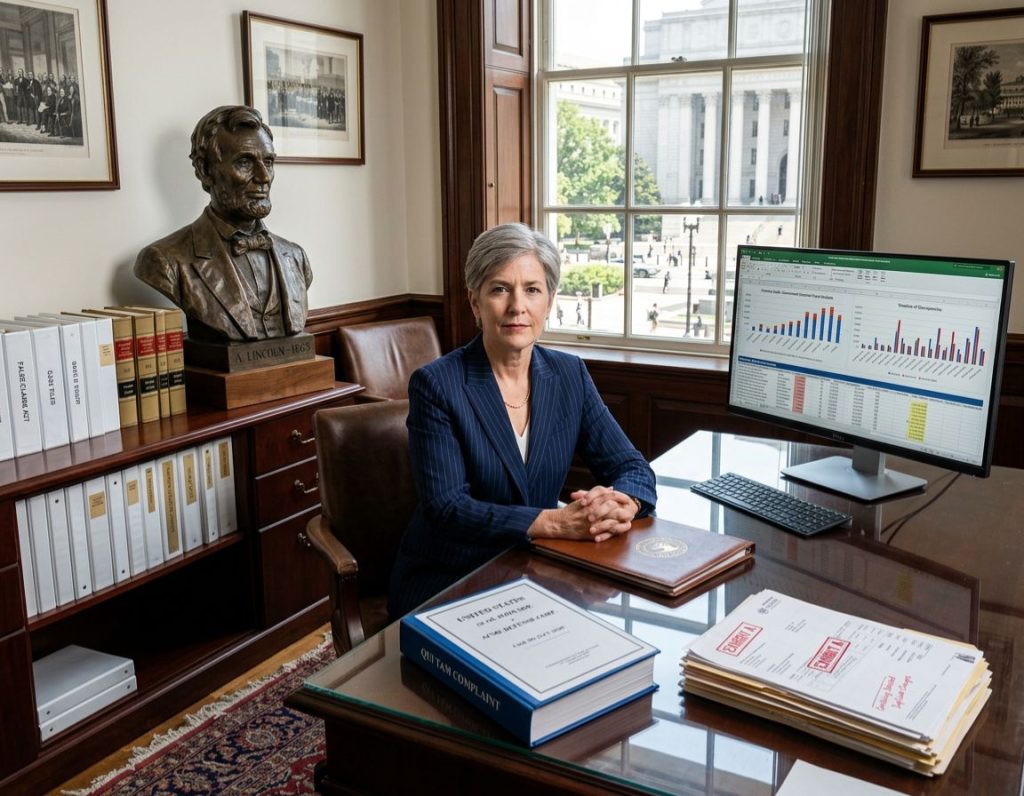
False Claims Act exposure no longer lives only in headlines about national hospital chains and pharmaceutical giants. If you work in healthcare leadership, compliance, or legal, False Claims Act risk sits in your revenue cycle, your referral patterns, your documentation templates, and your vendor relationships right now. A seasoned False Claims Act lawyer is not a luxury, it is a control.
You may be considering whether to report fraud as a whistleblower or you may be defending an investigation already in motion. In both scenarios, timing and precision count more than intent. That is where a specialized False Claims Act lawyer changes the outcome.
Understand what a False Claims Act lawyer really does
A False Claims Act lawyer is not just a litigator. You are engaging someone who understands how the statute operates in real hospitals, physician practices, managed care organizations, and ancillary providers.
At its core, the federal False Claims Act, 31 U.S.C. §§ 3729 to 3733, creates liability for anyone who knowingly submits or causes the submission of false or fraudulent claims for payment to the government, uses false records that are material to a false claim, improperly avoids repayment obligations, or conspires to do any of the above (Justice.gov). Penalties include treble damages and inflation adjusted per claim fines, currently in the five figure range per claim in many cases (Justice.gov, theodorewatson.com).
A focused False Claims Act lawyer helps you:
- Evaluate whether what you are seeing is a billing error, a systemic overpayment issue, or actionable fraud
- Map your fact pattern to the statute, related regulations, and agency guidance
- Navigate the qui tam process under seal if you are a whistleblower
- Respond strategically to subpoenas, civil investigative demands, and government inquiries if you are a target or subject
You are not hiring someone to send a demand letter. You are hiring someone to interpret risk across your entire operation.
Protect yourself if you are considering whistleblowing
If you are a clinician, revenue cycle leader, or executive who has uncovered structured upcoding, medically unnecessary services, sham consulting arrangements, or managed care manipulation, you are already in a precarious position. The False Claims Act allows you to file a qui tam case under seal on behalf of the United States, and if successful you may receive 15 to 30 percent of the government’s recovery plus attorneys fees paid by the defendant (Justice.gov, Phillips & Cohen).
However, you cannot file a False Claims Act qui tam case on your own. Courts have been consistent that relators may not proceed pro se because they are representing the interests of the United States, not just their own (Hoyer Law Group). The statute and the courts require you to work through counsel.
An experienced False Claims Act lawyer will:
- Assess whether your information is original and non public, which is critical because nearly anyone except certain military personnel and members of Congress can be a relator, but the information must not simply duplicate public allegations (Price Benowitz)
- Prepare and file your complaint under seal in compliance with strict procedural rules
- Interface with the Department of Justice and relevant agencies during the sealed investigation period
- Position your case so that the government is more likely to intervene, which significantly increases the odds of success (Phillips & Cohen)
The False Claims Act also protects you from employer retaliation, including reinstatement, double back pay, interest, and special damages if you are discriminated against for lawful actions in furtherance of a case (Phillips & Cohen). A lawyer who lives in this statute can help you document and preserve those rights starting on day one.
If you are weighing when and how to act, the whistleblower representation focus at The Health Law Offices of Anthony C. Vitale, P.A. is tailored to healthcare professionals in exactly your position.
Navigate investigations and enforcement with less disruption
On the defense side, receiving a subpoena, Civil Investigative Demand, target letter, or search warrant related to potential False Claims Act violations is no longer rare. In the fiscal year ending September 30, 2024, the Department of Justice recovered over 2.9 billion dollars in civil fraud and false claims matters (Justice.gov). Healthcare and defense contracting remain the dominant sectors for those recoveries (Price Benowitz).
A False Claims Act lawyer who understands healthcare can:
- Stabilize your response during the first critical days or weeks after receiving process
- Stop informal communications that may be incomplete or inaccurate
- Implement a litigation hold that prevents spoliation accusations, while still allowing operations to continue
- Structure internal reviews and interviews so you can understand what actually happened without compounding risk
Defense firms with former DOJ prosecutors and agency attorneys highlight how valuable insider knowledge of enforcement strategy can be in these situations (theodorewatson.com). Your own counsel should provide the same level of strategic thinking, narrowed to healthcare billing requirements, medical necessity standards, anti kickback rules, and managed care contracts.
The Health Law Offices of Anthony C. Vitale, P.A. works with hospitals, physician practices, home health agencies, and other providers to respond in a way that both respects the government’s authority and preserves your operational viability.
Reduce financial and regulatory exposure early
False Claims Act exposure is expensive long before trial. Treble damages, per claim penalties that can run from roughly thirteen thousand to over twenty seven thousand dollars, and potential exclusion from federal programs combine to create leverage for the government (theodorewatson.com). Add concurrent state False Claims Acts and private payer follow on litigation and you are looking at an enterprise level risk.
Early engagement with a False Claims Act lawyer allows you to:
- Identify overpayment issues that can be addressed through self disclosure protocols
- Separate high risk service lines or contracts from low risk core operations
- Develop remediation plans that carry weight with regulators and payers
- Control the narrative about your compliance culture instead of reacting to it
Since 1986, federal and state False Claims Acts have driven more than 85 billion dollars in recoveries based on fraud against taxpayers (FalseClaimsAct.com). That figure exists because organizations did not address anomalies early. You do not need to guess where your risk sits. You can map it and mitigate it with counsel that understands how government lawyers think about damages, scienter, and corporate compliance programs.
Leverage qui tam and whistleblower procedures correctly
If you are on the reporting side, the qui tam process under the False Claims Act is technical. Complaints are filed under seal, you cannot discuss the case publicly, and the government has a set period, typically extended by the court beyond the initial sixty days, to decide whether to intervene (Phillips & Cohen). During that sealed period, investigators will quietly test your allegations against claims data, medical records, and witness interviews.
Your False Claims Act lawyer is your conduit to that process. You will not attend every meeting. You will not draft every memo. Your counsel will:
- Present your facts in a way that is usable for investigators, not just emotionally compelling
- Anticipate defenses the target is likely to raise and address them in the disclosure
- Coordinate with agencies beyond DOJ if necessary, such as HHS OIG, CMS, or state Medicaid Fraud Control Units
History shows that whistleblower cases drive the majority of False Claims Act recoveries. Since the 1986 amendments strengthened incentives, more than 13,200 qui tam cases have produced over 55 billion dollars in recoveries through civil settlements and criminal fines (Phillips & Cohen). If you are going to step into that arena, you want counsel that has done it before, not someone learning the statute on your time.
For healthcare professionals in Florida who are ready to move, The Health Law Offices of Anthony C. Vitale, P.A. offers qui tam representation miami lakes designed for exactly this path.
Choose the right False Claims Act lawyer for healthcare
You have options. National firms emphasize scale and government facing experience. For example, some firms highlight national qui tam practices with hundreds of millions in recoveries for whistleblowers (FalseClaimsAct.com), while others stress deep healthcare regulatory and government contracts expertise to defend the largest hospital systems and device manufacturers in complex fraud matters (Latham & Watkins). Those models can be valuable, especially when your matter spans multiple jurisdictions or industries.
At the same time, you need to vet any False Claims Act lawyer or firm very carefully:
- Confirm that the firm actually filed and litigated the whistleblower cases or defense matters they list, not that they simply cite public cases as marketing material (Phillips & Cohen)
- Look for real experience with healthcare billing, anti kickback, Stark, Medicare Advantage, and Medicaid managed care, not just generic white collar credentials
- Ask about prior interactions with DOJ, U.S. Attorneys Offices, HHS OIG, CMS, and state Medicaid agencies, because government participation dramatically increases case success rates (Phillips & Cohen)
- Clarify how the firm staffs cases and who will handle day to day work
Many leading whistleblower firms work on a contingency basis and provide free consultations, which makes representation accessible without upfront legal fees (iFightForYourRights, Phillips & Cohen). Defense representation usually uses different fee structures, so you should ask early for a clear cost model tied to stages of the investigation.
The Health Law Offices of Anthony C. Vitale, P.A. integrates healthcare regulatory depth with focused False Claims Act experience so that you are not educating your own counsel about how your revenue streams work. You get practical, Florida grounded advice with national level awareness of enforcement trends.
Key point: A False Claims Act lawyer should understand both the statute and the way your particular part of healthcare actually operates day to day. Without both, you are taking unnecessary risk.
5 key takeaways
- The False Claims Act is not just a litigation risk, it is a daily operational risk for healthcare organizations that touch federal funds.
- You cannot file a qui tam case on your own. Courts require you to work through a qualified False Claims Act lawyer to protect the government’s interests.
- Early engagement with counsel, whether you are a whistleblower or a target, often determines how much control you retain over timing, scope, and financial exposure.
- Healthcare specific experience matters. Your lawyer must understand coding, medical necessity, referral relationships, and payer rules, not just general fraud concepts.
- The Health Law Offices of Anthony C. Vitale, P.A. helps you use the False Claims Act as a tool when you need to report fraud and as a shield when you must respond to investigations.
Frequently asked questions
1. When should you contact a False Claims Act lawyer?
You should contact a False Claims Act lawyer as soon as you suspect structured fraud involving government healthcare programs or as soon as you receive any sign of government interest, such as a subpoena, Civil Investigative Demand, or inquiry letter. Early legal advice helps you preserve documents, avoid damaging statements, and decide whether internal remediation, self disclosure, or a qui tam filing is appropriate. Waiting until the government has already formed conclusions leaves you with fewer options and higher costs.
2. Can you file a False Claims Act case anonymously without a lawyer?
No. While the False Claims Act requires that qui tam complaints be filed under seal to protect your identity during the government’s investigation, you cannot file pro se. Courts have uniformly held that relators must be represented by counsel because they are asserting the rights of the United States, not just their own (Hoyer Law Group). A qualified False Claims Act lawyer will ensure that your case is filed correctly, under seal, and with your anonymity protected consistent with the statute.
3. What types of healthcare fraud most often trigger False Claims Act cases?
The most common healthcare related False Claims Act cases involve upcoding, billing for medically unnecessary or never performed services, illegal kickback schemes, unlawful pharmaceutical and device marketing, and abuse of Medicare and Medicaid managed care programs (FalseClaimsAct.com, Burg Simpson, Price Benowitz). In many instances, the government relies on whistleblowers with inside knowledge of these schemes to bring evidence forward. A False Claims Act lawyer helps you distinguish between compliance gaps and fraud and then respond accordingly.
4. What financial risks do you face in a False Claims Act investigation?
If you are on the defense side, the False Claims Act exposes you to treble damages and significant per claim penalties that can exceed twenty thousand dollars per claim in many cases, plus potential exclusion from federal healthcare programs (Justice.gov, theodorewatson.com). You may also face parallel state False Claims Act actions and private payer suits. Engaging a False Claims Act lawyer early allows you to quantify that exposure, explore settlement or self disclosure strategies where appropriate, and implement corrective actions that can mitigate penalties.
5. How can The Health Law Offices of Anthony C. Vitale, P.A. help you today?
The Health Law Offices of Anthony C. Vitale, P.A. focuses on healthcare regulatory compliance, whistleblower representation, and False Claims Act matters for providers and professionals across Florida. Whether you are considering filing a qui tam case, responding to a government inquiry, or reviewing a high risk service line before it draws scrutiny, you receive practical, outcome focused advice. To discuss your situation confidentially and on your terms, you can schedule a consultation at our Miami Lakes office and start building a plan that fits your organization and your career.
This article is for informational purposes only and does not constitute legal advice. Accreditation requirements vary by state and payor contract. Consult with a qualified attorney regarding your specific compliance obligations.