


Statewide law enforcement efforts against Medicaid fraud were dealt a significant setback when an Orange County Circuit judge declared Florida’s Patient Brokering Law unconstitutional — effectively gutting a 130-count criminal case against two Miami-Dade dentists and their associates.
Key Takeaways
- Orange County Circuit Judge Thomas B. Smith declared Florida’s Patient Brokering Law unconstitutional on February 1.
- The ruling dismissed a 130-count criminal case against Dr. Sonia Bonilla, Dr. Anamaria Bonilla, and three co-defendants.
- Attorney Anthony C. Vitale successfully argued the state had criminalized ordinary business management practices between dental groups and management companies.
- The decision also struck down a provision of Florida’s Medicaid fraud statute, extending earlier rulings from South Florida courts.
- Legal observers warned that an unchecked patient brokering environment could bankrupt Florida’s Medicaid program, which serves approximately 2.3 million people.
The Ruling That Changed Florida Medicaid Enforcement
Orange County Circuit Judge Thomas B. Smith issued an order declaring Florida’s Patient Brokering Law unconstitutional in a criminal case involving two Miami-Dade dentists who had opened a clinic in Orange County. Judge Smith also found unconstitutional a provision in Florida’s Medicaid fraud statute governing the filing of false claims by healthcare providers — ruling that the law had illegally lowered the standard previously set by Congress for what constitutes such fraud.
The decision effectively dismantled a 130-count information alleging racketeering, conspiracy, fraud, split-fee patient brokering, and violations of the White Collar Crime Victim Protection Act against Dr. Sonia Bonilla and Dr. Anamaria Bonilla, who are sisters. Also named in the case were dental practice management company owner John Anthony Rubio and two of Rubio’s employees, Iliana Martin-Fernandez and Gustavo Adolfo Fernandez. The case had been filed by the Office of Statewide Prosecution in 2003.
The State’s Allegations Against the Bonilla Sisters
The state alleged the defendants had billed the Agency for Health Care Administration (AHCA) — which oversees Florida’s Medicaid program — for services that were not performed or only partially performed, for services performed incorrectly, and for radiation services provided by unlicensed or otherwise unqualified persons.
The Bonilla sisters had expanded their successful South Florida dental practice to Orlando in 2001, hiring Rubio’s now-defunct Coral Gables firm, Dental Management Corp., to run the business operations. The state initially filed a civil forfeiture action against the Bonillas, seeking to recover approximately $700,000 in alleged false claims. A year later — without advance warning, according to defense counsel — criminal charges were filed. The Bonillas subsequently closed their Orlando office voluntarily.
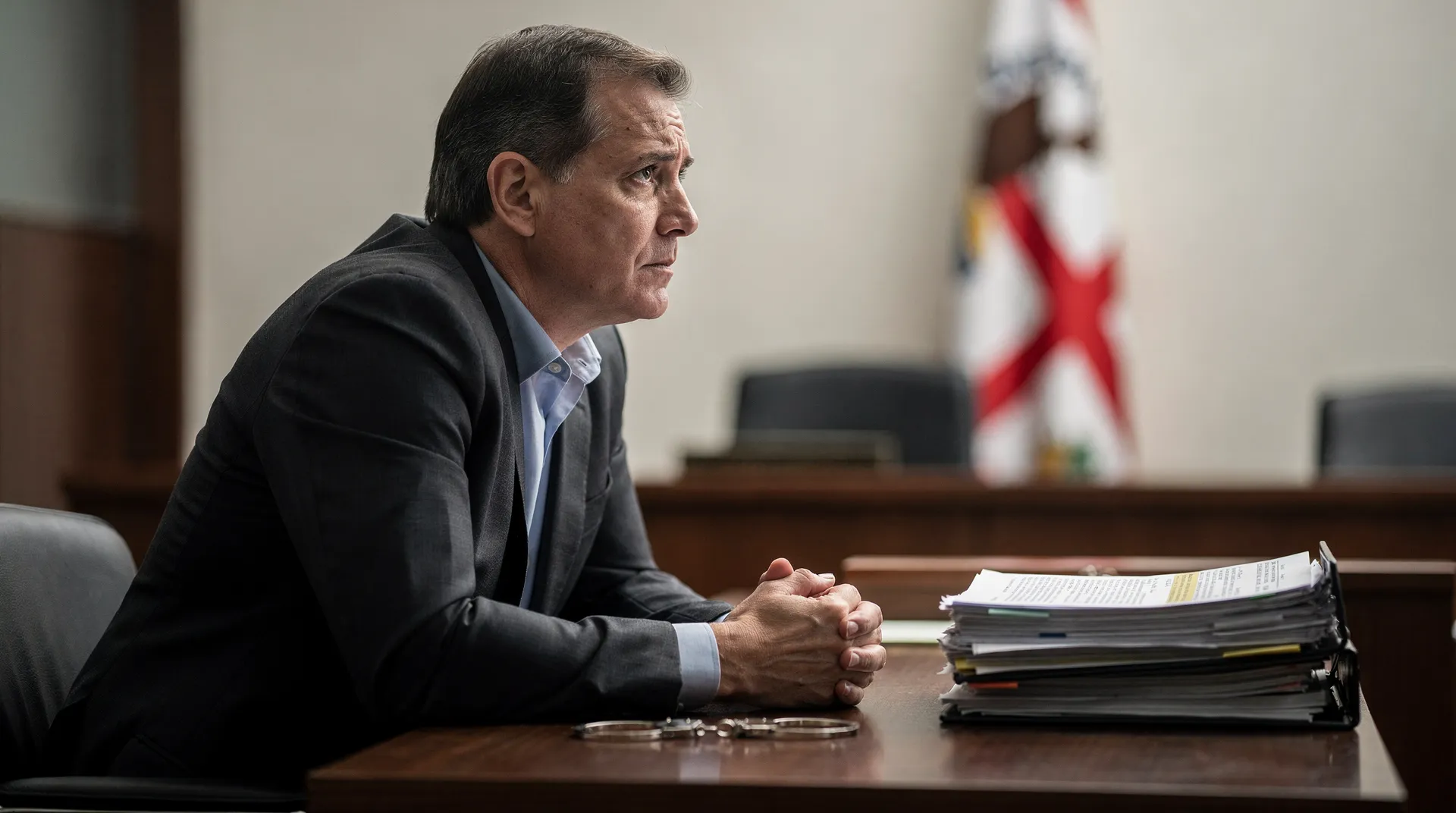
The Defense: Criminalizing Normal Business Practices
Defense attorneys, including Miami attorney Anthony C. Vitale of The Health Law Offices of Anthony C. Vitale, P.A., argued the state was seeking to criminalize standard business management and marketing practices common to the healthcare industry.
“We believe the state misused the law in going after the marketing arrangement between the practice management company and the dental group,” said Vitale, who represented the Bonilla sisters alongside co-counsel G. Richard Strafer of Miami. “There is no bright line that you can do this and you can’t do that.”
Vitale noted the ruling “should prompt defendants charged or convicted of patient brokering under this statute” to seek dismissal or reversal of their charges — a legal ripple effect he acknowledged the moment Judge Smith’s order was handed down.
What Florida’s Patient Brokering Law Actually Did
Florida’s Patient Brokering Law, enacted in 1996, was originally designed to curb abuses in the referral of patients to psychiatric hospitals and substance abuse facilities — a problem previously exposed by investigative reporting. The statute went further than most states, criminalizing not only patient referrals but also, for the first time in the nation, “any illegal fee-split arrangement in any form whatsoever” designed to induce patient referrals.
Those convicted of the felony faced sentences of up to five years in prison. Proponents of the law argued that paying for patient referrals “often results in the administration of unnecessary, excessive and inappropriate healthcare services” — a concern reflected in the law’s original legislative analysis. Critics, however, argued the statute’s broad scope swept up legitimate business arrangements between healthcare providers and their management firms.

The Broader Stakes: Medicaid, Fraud, and Florida’s Fiscal Exposure
At the time of the ruling, Florida spent approximately $14 billion annually — roughly one-fourth of its state budget — on Medicaid, the federal-state public assistance program serving approximately 2.3 million residents who are poor, medically needy, elderly, or disabled. Governor Jeb Bush had proposed a $707.1 million increase in state Medicaid spending for fiscal year 2005–2006, while simultaneously advancing a privatization plan in which beneficiaries would receive vouchers to purchase coverage in the private market, citing unsustainable average annual funding increases of 13 percent.
Former healthcare fraud prosecutor Stephanie Aleong, then an assistant professor of law at Nova Southeastern University, warned that striking down the patient brokering statute “undercuts one of the major tools Florida has to fight Medicaid fraud.” Aleong described the practice of referring patients to healthcare providers in exchange for a fee share as “predatory,” cautioning that if left unchecked it creates a system rife with fraud. “If you cannot prevent this, it will bankrupt Medicaid,” Aleong said.
An appeal of Judge Smith’s ruling was widely expected.
A Ruling That Extended Earlier Constitutional Challenges
Judge Smith’s ruling was not without precedent. His decision extended prior holdings from South Florida courts, where judges had already found another enforcement prong of Florida’s Medicaid fraud statute — its anti-kickback provision — unconstitutional. Miami-Dade Circuit Judge David Miller had issued that earlier ruling in a case involving Miami-Dade dentist Dr. Gabriel Harden. In January 2004, the Third District Court of Appeal affirmed Miller’s decision, with that case subsequently advancing to the Florida Supreme Court.
By also striking down the false claims provision of the Medicaid fraud statute, Judge Smith’s order built on those earlier rulings and further limited the state’s prosecutorial toolkit.
How The Health Law Offices of Anthony C. Vitale, P.A. Defends Florida Providers
The Health Law Offices of Anthony C. Vitale, P.A. has represented healthcare providers in high-stakes Medicaid and Medicare enforcement matters for decades. The firm’s defense of the Bonilla sisters — culminating in a constitutional challenge that dismantled a 130-count prosecution — illustrates the depth of the firm’s litigation capabilities and its willingness to pursue aggressive, statute-level defenses when providers face prosecutorial overreach.
The firm’s healthcare law practice covers:
- Medicare and Medicaid fraud defense
- False Claims Act litigation and Qui Tam matters
- Anti-Kickback Statute and Stark Law compliance disputes
- Medicaid Fraud Control Unit representation
- Overpayment disputes, audits, and administrative appeals
- DEA, OIG, FBI, and Department of Justice investigations
- Licensure and regulatory representation
Florida providers navigating Medicaid audits, civil forfeiture actions, or criminal investigations benefit from counsel who understands both the law and the enforcement environment. The firm offers a free 15-minute consultation to help providers assess their exposure and identify immediate next steps.
To speak with a healthcare attorney, contact The Health Law Offices of Anthony C. Vitale, P.A. at (305) 358-4500, email info@vitalehealthlaw.com.
Frequently Asked Questions
What did Judge Smith’s February 1 ruling actually decide?
Judge Smith declared Florida’s Patient Brokering Law unconstitutional and also struck down a false claims provision of Florida’s Medicaid fraud statute, ruling the state law had lowered the fraud standard Congress had set. The combined effect was to dismiss a 130-count criminal case against five defendants, including Dr. Sonia Bonilla and Dr. Anamaria Bonilla.
Why were the Bonilla sisters prosecuted under the Patient Brokering Law?
The state alleged the sisters’ dental practice billed AHCA for services not performed, partially performed, or rendered by unqualified personnel, and that their arrangement with a dental management company constituted illegal fee-splitting under the Patient Brokering Law. Defense attorneys argued the arrangement reflected ordinary business management practices, not criminal conduct.
What penalties do providers face under Florida’s patient brokering statute?
Providers convicted under Florida’s patient brokering felony statute face sentences of up to five years in prison per count, in addition to civil penalties, forfeiture of proceeds, and potential permanent exclusion from Florida’s Medicaid program.
Who represented the Bonilla sisters?
Miami attorney Anthony C. Vitale, of The Health Law Offices of Anthony C. Vitale, P.A., represented the Bonilla sisters alongside co-counsel G. Richard Strafer. Vitale argued the state had criminalized legitimate business management practices between a dental group and its management company.
What is the broader significance of Judge Smith’s ruling for Florida healthcare providers?
The ruling opened the door for defendants statewide who had been charged or convicted under the same statutes to seek dismissal or reversal. By striking down both the patient brokering provision and the false claims prong of the Medicaid fraud statute, the decision significantly curtailed prosecutors’ enforcement tools and established a precedent with statewide implications.