


In 2019, Anthony C. Vitale — president of the Health Law Offices of Anthony C. Vitale, P.A. — authored a compelling commentary in the Daily Business Review that warned Florida’s health care community about the unintended consequences of a newly signed amendment to the state’s Patient Brokering Act (PBA). More than five years later, the issues raised in that piece remain as relevant as ever. Here is a look back at that landmark article.
The Patient Brokering Act: Florida’s Primary Anti-Kickback Law
The PBA is Florida’s primary anti-kickback law — an all-payer felony statute that reaches both private insurance and the Florida Medicaid program. Violations are punishable by up to five years in prison and fines between $50,000 and $500,000 per violation.
The PBA prohibits the offer, payment, solicitation, or receipt of any payments, bonuses, commissions, rebates, fee-split arrangements, or benefits intended to induce or reward referrals to or from a health care provider or facility. There are, however, exceptions. The PBA adopted payment arrangements expressly authorized by the federal Anti-Kickback Statute (AKS) and federal safe harbor regulations, 42 C.F.R. § 1001.952. Safe harbor regulations immunize from criminal and civil prosecution certain payment and business practices implicated by the AKS, which were enacted in response to concerns that relatively innocuous commercial arrangements could otherwise be prohibited.
HB 369: A Well-Intentioned Amendment That Created New Problems

Although the primary focus of HB 369 — which took effect July 1, 2019 — related to fraud in the substance abuse industry, one provision, subsection 817.505(3)(a) of the Florida Statutes, amended the PBA in a way that may conflict with federal law and subject certain payment and health care marketing arrangements to additional scrutiny.
As originally enacted, the PBA’s adoption of federal safe harbors allowed for discount, payment, waiver of payment, or payment practices “not prohibited” by the federal Anti-Kickback Statute, 42 U.S.C. § 1320a-7b(b). HB 369 changed that language to payment practices “expressly authorized” by the AKS — and therein lies the problem.
By shifting from “not prohibited” to “expressly authorized,” the Florida Legislature may have set itself up for legal challenges and placed into jeopardy many business arrangements previously considered compliant with the law.
The AKS and its safe harbor regulations do not expressly authorize business or payment practices. One interpretation is that HB 369 now requires that a payment arrangement meet a federal anti-kickback statute exception or safe harbor. However, this interpretation conflicts with federal safe harbor guidance. The Office of Inspector General (OIG), which promulgated the federal safe harbors, has stated that failure to meet a safe harbor does not render an arrangement per se illegal. Any arrangement requires a review of the “totality of the facts and circumstances and the intent of the parties to determine whether or not the arrangement poses a risk of fraud and abuse.”
A History of Defective Anti-Kickback Laws in Florida

As Vitale noted in 2019, this was not the first time Florida lawmakers had missed the mark. Florida has a long history of defective anti-kickback statutes that created unnecessary risk and exposure for health care marketing and professional arrangements.
In 2006, the Health Law Offices of Anthony C. Vitale and Richard Strafer successfully had the anti-kickback section of the Florida Medicaid Provider Fraud Statute — § 409.920(e) — declared unconstitutional. In State v. Harden, 938 So.2d 480 (Fla. 2006), the Florida Supreme Court found the statute unconstitutional because it lacked exceptions and safe harbors, as well as the knowing and willful mens rea intent standard — effectively criminalizing conduct that federal law specifically intended to be lawful.
“There is clear congressional intent to exempt compensation paid by employers to bona fide employees (employee safe harbor) for providing covered items or services from those remunerations that constitute prohibited kickbacks under the federal statute.” — Florida Supreme Court, State v. Harden
In response, the Florida Legislature amended the Medicaid Provider Fraud Statute (FS § 409.920) to incorporate the heightened mens rea requirement and provide clearer guidance for health care marketing, business planning, and professional relationships. The amendment defined “knowingly” to mean an act done voluntarily and intentionally — not by mistake or accident — and incorporated the term “willfully” to require specific intent to violate the law.
The PBA, however, does not contain this same heightened knowing and willful mens rea requirement. That omission increases the risk for health care marketing arrangements and reduces protection against negligent or inadvertent conduct being subject to criminal prosecution. The PBA and the Medicaid Provider Fraud Statute (FS § 409.920) are now in conflict — a concern for providers treating patients under both private insurance and federally funded programs, who may be immune from criminal prosecution under federal law but subject to prosecution under the PBA for the same payment arrangement.
The Fourth DCA Decision: A Further Complication
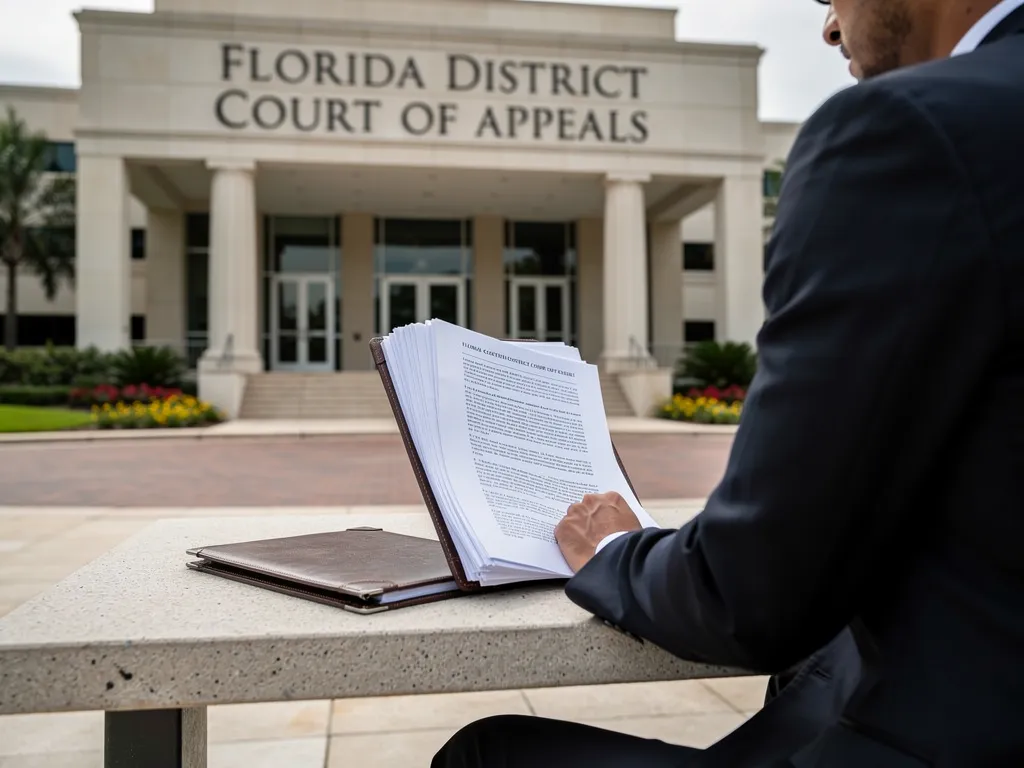
Compounding the problem at the time was a Florida Fourth District Court of Appeals decision — State v. Kigar, No. 4D19-0600 (Fla. 4th DCA Aug. 7, 2019) — which held that the PBA is a “general intent crime.” As a result, the good-faith reliance on an “advice of counsel” defense cannot be raised by those accused of patient brokering.
In practical terms, this means that if a health care provider seeks legal counsel, receives an opinion that their business arrangement is lawful, and is later prosecuted under the PBA, that legal advice cannot be used as a valid defense. Prosecutors are also not required to prove the defendant had a specific intent to violate the statute — only that they intended to commit the act itself.
The PBA Also Lacks an Advisory Opinion Mechanism

Another notable gap in the PBA: unlike the AKS, which includes an advisory opinion mechanism allowing parties to seek guidance on whether a specific arrangement violates the statute or qualifies for safe harbor protection, the PBA provides no such mechanism. This leaves health care providers and their counsel without a formal avenue to obtain pre-transaction compliance assurance.
What This Means Today

Looking back, Vitale’s 2019 commentary proved prescient. The issues he identified — conflicting federal and state standards, the absence of a mens rea requirement, and the risk exposure created by HB 369 — have continued to shape the compliance landscape for Florida health care providers.
Health care businesses are strongly advised to review their existing professional arrangements and consult qualified legal counsel to ensure compliance with the Florida Patient Brokering Act and all applicable state and federal anti-kickback laws.
Anthony C. Vitale is the president of the Health Law Offices of Anthony C. Vitale, P.A. Established in 1982, the Miami-based firm is recognized as a leader in health care law and consultation. His practice focuses on Medicare defense, litigation, criminal, civil, regulatory, qui tam/whistleblower, administrative, and licensure representation of health care providers, including physicians, pharmacies, clinics, home health agencies, laboratories, durable medical equipment suppliers, and other health care providers and suppliers.
For more information, contact the Health Law Offices of Anthony C. Vitale, P.A. at (305) 358-4500 or info@vitalehealthlaw.com